DISCOVERY · INFORMATION ARCHITECTURE · iOS + ANDROID
Making Buried Features Findable by Designing Around Intent
COMPANY
Real Geeks
ROLE
Lead Designer
EXPERTISE
Information Architecture · UX Research · UX/UI Design · Prototyping
YEAR
2025
+368% active users
+874% interaction events
3.7x more engagement per session
Shipped on iOS, then adapted for Android
The app had what users needed. They just couldn’t find it.
MoveTo helps people search for homes, book tours, and explore financing. These should feel like one confident journey. Instead, the interface buried its most important actions. Users overlooked Schedule a Tour and Contact Agent, and almost no one opened the mortgage and equity calculator. After years without roadmap investment, many users didn’t know these features existed.
The result:
Flat usage analytics
Short, passive, low-intent sessions
Core actions rarely triggered
For the business, missed actions meant fewer conversations between buyers and agents, which meant lost revenue.
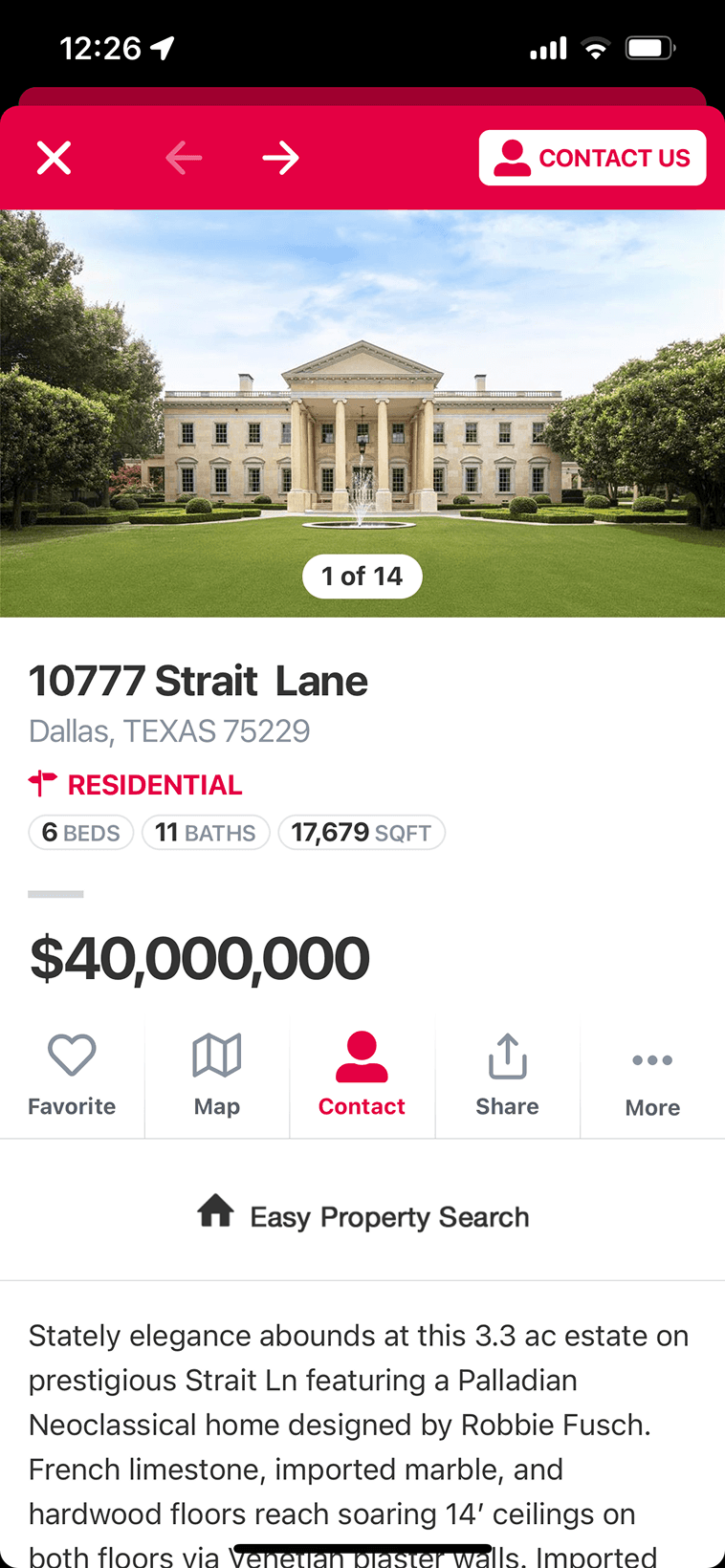

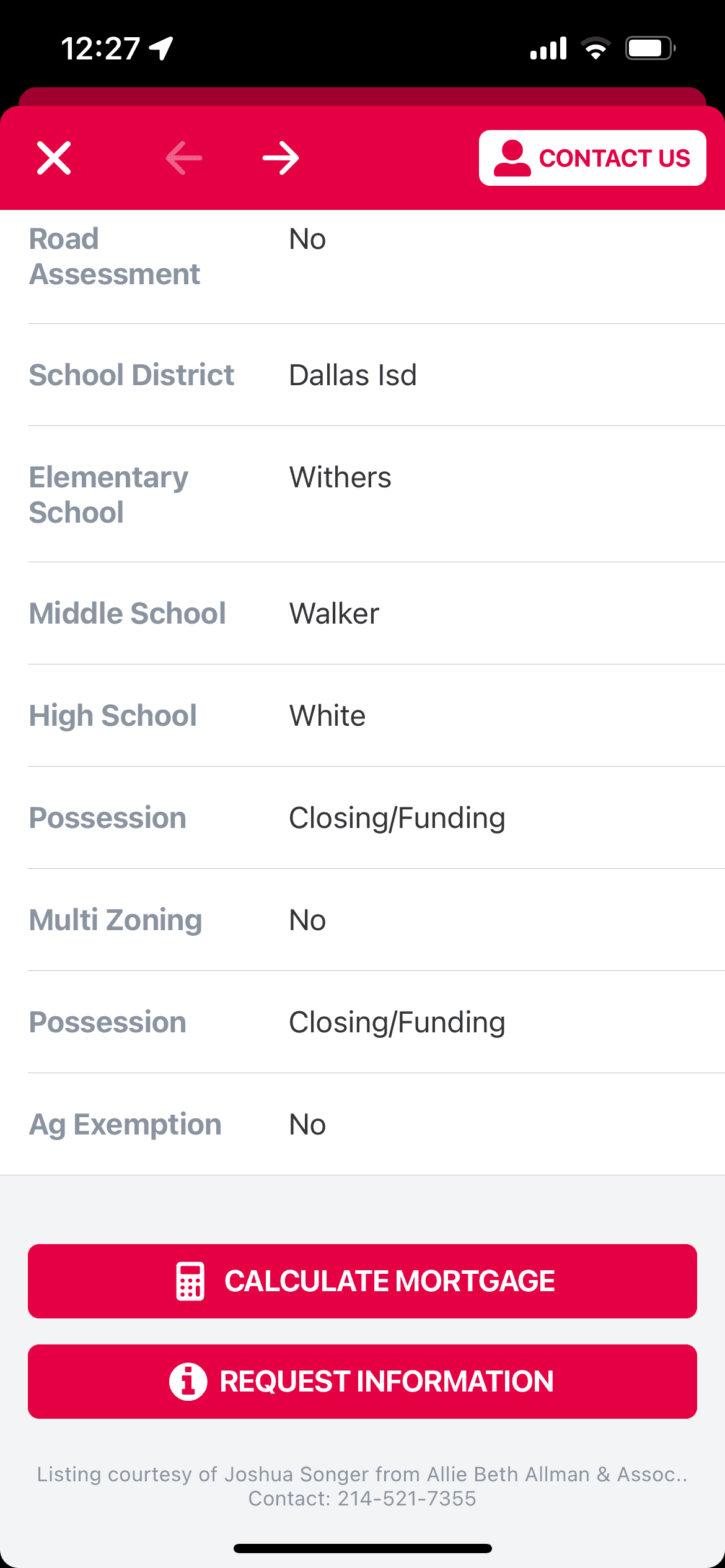
Maximize behavior change with minimal resources, and avoid a common trap: answering low engagement by adding more equal-weight buttons that compete for attention.
The risks:
Overloading the screen with calls to action
Losing clarity on what matters most
Creating visual noise instead of momentum
If primary actions are visually prioritized and placed at the moments users need them, users will act sooner, hesitate less, and explore further.
Three principles guided the work:
Hierarchy before quantity
Behavioral triggers over visual clutter
Clarity and confidence over new features
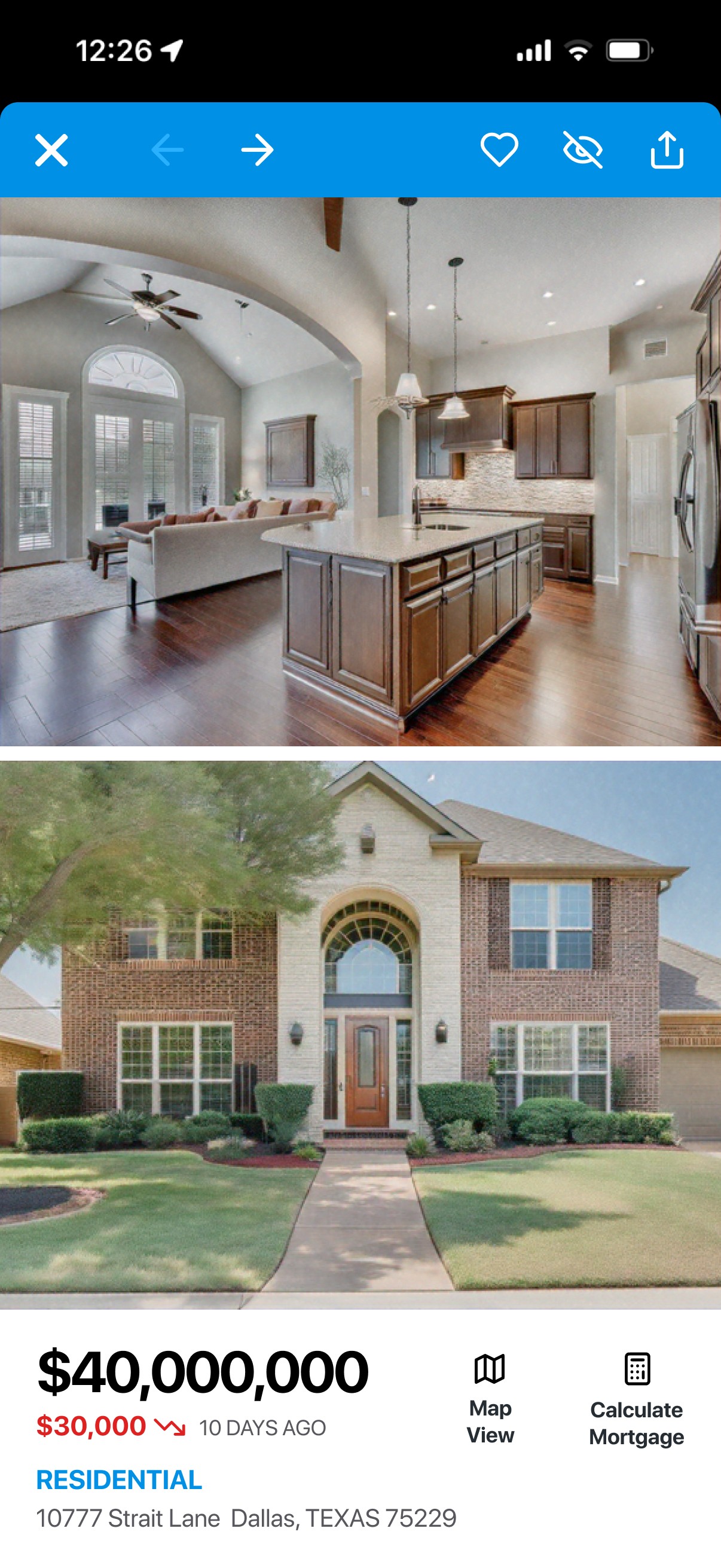
1. Talk to users first. At the Real Growth Summit, we spoke directly with users and prospective users. Many had never heard of the product. That reframed the work: this was a discovery and trust problem, not just a visual one.
2. Rebuild the information architecture.
Group actions by user intent
Make primary paths linear and visible
Place utility features at decision moments
Reduce cognitive load on purpose
3. Prototype the hesitation points. I built and iterated a clickable prototype in Figma that modeled where users paused, where flows got unclear, and where intent dropped off.
4. Frame every CTA. Each call to action needed to answer four questions: what to tap first, why it matters, what happens next, and how it helps me.
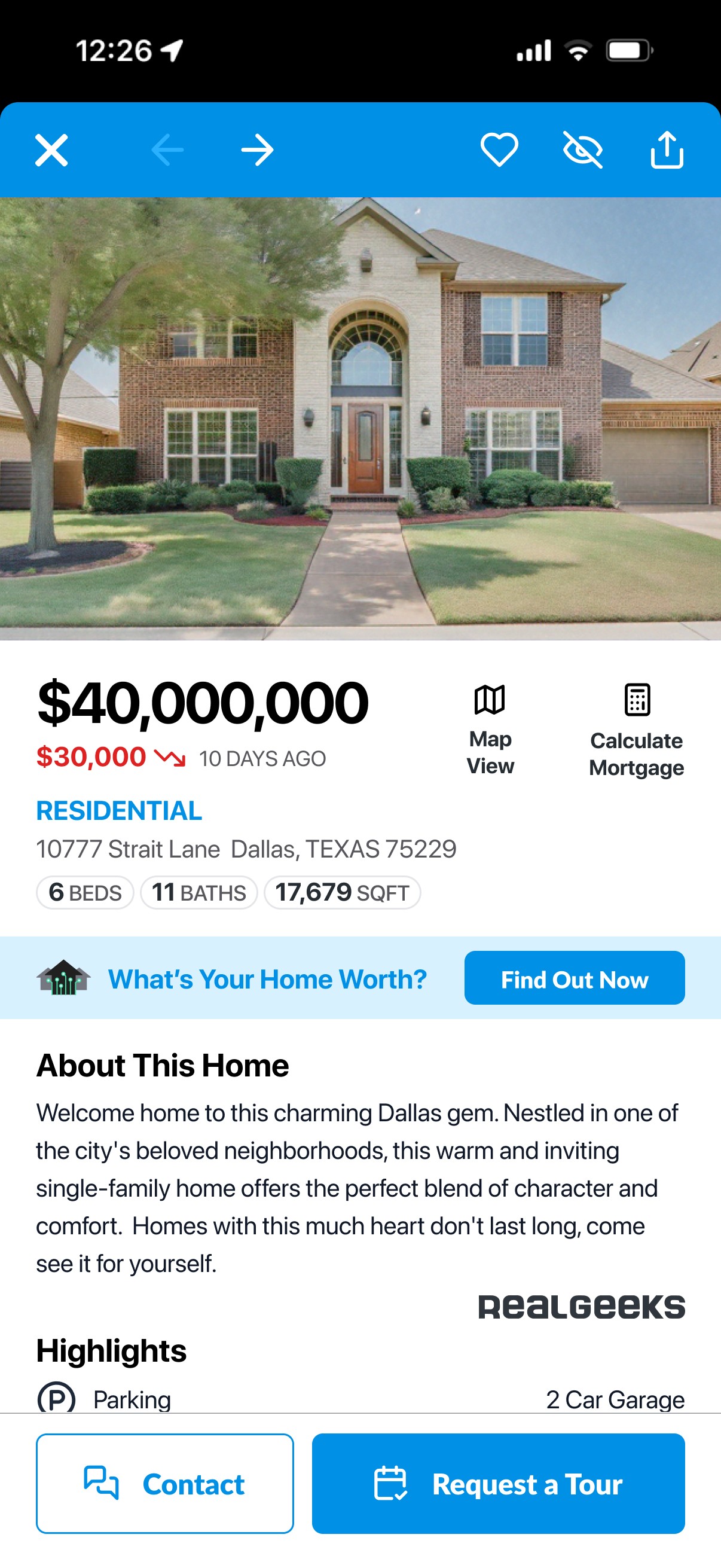
1. Promote the primary actions.
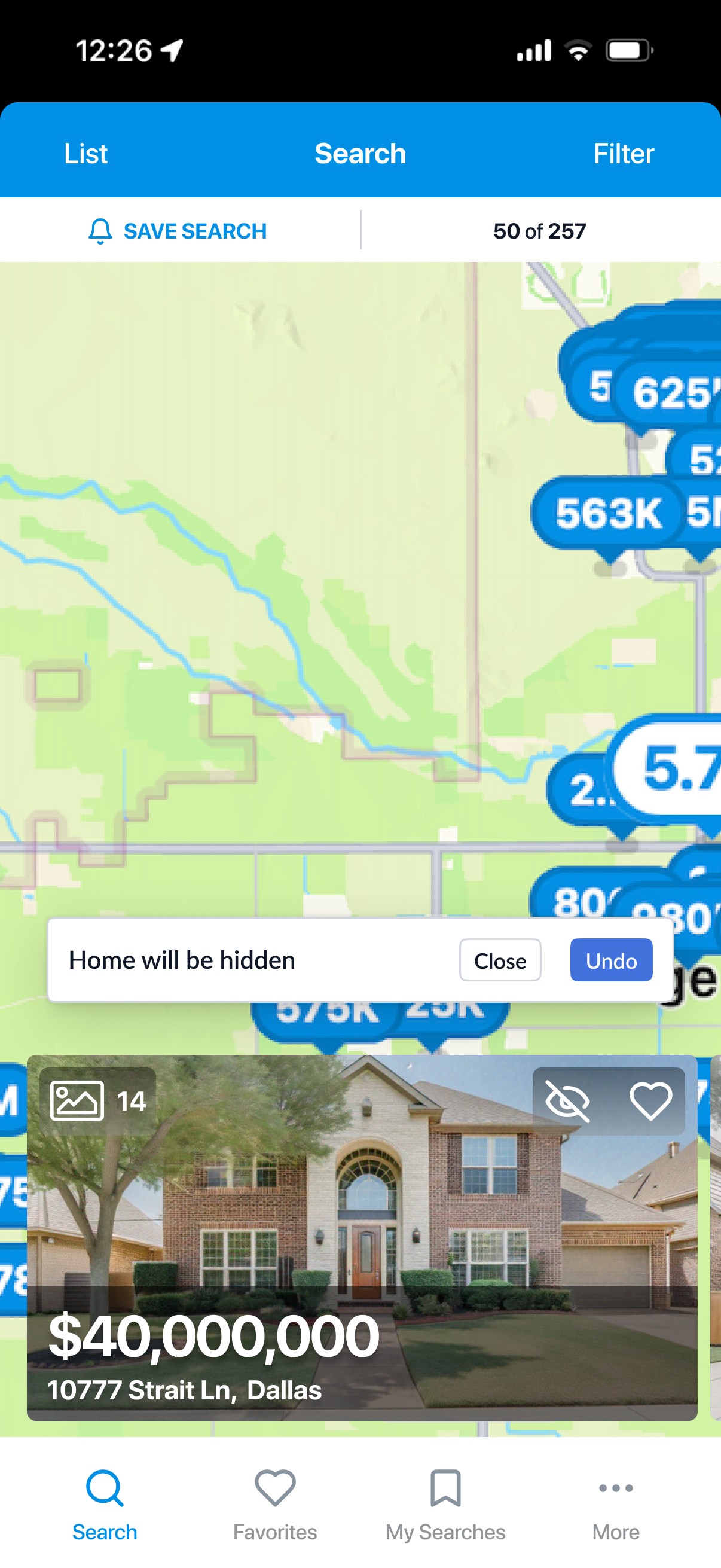
I moved tour scheduling and agent contact into the natural browsing flow instead of menus.
Tradeoff: fewer CTAs means less exposure for secondary features, but much stronger action rates on what matters.
2. Give tools context, not just visibility.
People don’t tap calculators; they tap confidence. The calculator needed framing and placement at the moment a user is weighing a home.
Tradeoff: more elements on screen, but only when tied to what the user is doing.
3. Quiet the secondary actions.
I limited competing actions and used hierarchy, proximity, and framing so the app felt like one guided experience, not a collection of separate features.
Tradeoff: a more minimal canvas, offset by clearer storytelling and structured sections.
The challenge wasn't a lack of potential features. It was deciding which changes would make the greatest difference without requiring a complete product rebuild.
I focused the redesign on improving the experience users already had: making primary actions easier to find, organizing information around user intent, and reducing the friction between browsing a home and taking the next step.
Working with product managers and engineers, I approached the work as a series of targeted improvements rather than a broad feature expansion. This meant prioritizing changes that could improve discoverability and engagement while working within the existing product structure.
One of the most important decisions was what not to emphasize. Giving every feature equal visual weight would have recreated the problem we were trying to solve. Instead, I used hierarchy, context, and progressive disclosure to create a clearer path through the experience.
The result was a more focused product that encouraged meaningful actions without asking users to learn an entirely new interface.
After iOS shipped with strong results, the next step was Android, which has a different user base and design language. A direct port would have felt foreign and undercut the trust we’d built.
Navigation: kept the bottom nav, but adjusted touch targets, elevation, and motion to Material Design conventions
Components: replaced iOS patterns like action sheets, swipe gestures, and haptics with Android equivalents, without losing the hierarchy that drove results
Device range: tested the listing view and financial tools across Android’s wide range of screen sizes and densities
The goal wasn't simply to modernize the interface. It was to change how people engaged with the product.
I evaluated the redesign using behavioral analytics, focusing on whether users were discovering more of the experience, spending more time engaging with it, and reaching important decision points.
The primary indicators included:
Active users and overall interaction events
Views per user and session engagement
Mortgage calculator usage
Visits to the scheduling experience
These metrics provided a broader picture than any single button interaction. Together, they helped show whether the redesigned hierarchy was encouraging users to explore and engage more deeply.
While scheduling page views served as a proxy for lead intent, completed agent conversations were not directly measured in this analysis. The results therefore demonstrate improved product engagement rather than a confirmed increase in downstream conversions.
Following the March 10, 2025 launch, I used Google Analytics to evaluate changes in user behavior against pre-launch baseline metrics. The redesign was associated with a 368% increase in active users, an 874% increase in interaction events, and 3.7x more engagement per session - all before a formal marketing push.
Active users: +368%
Interaction events: +874%
Views per user: +151%
Session duration: +97.5%
Engagement per session: 3.7x
Mortgage calculator views: +112%
Scheduling page views: +109%
The buttons didn’t just get bigger. The journey got clearer, so the product became discoverable and the actions became obvious.
Contact Agent wasn’t tracked as its own metric for this launch, so scheduling page views are the closest measure of lead intent.
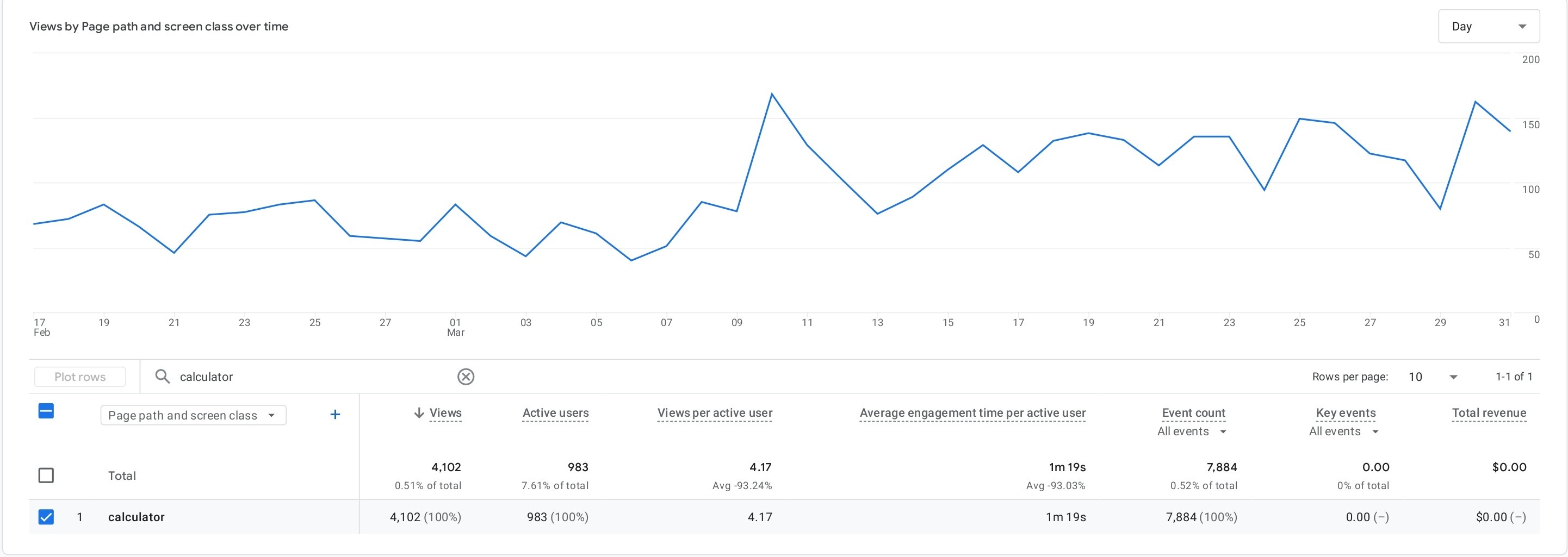
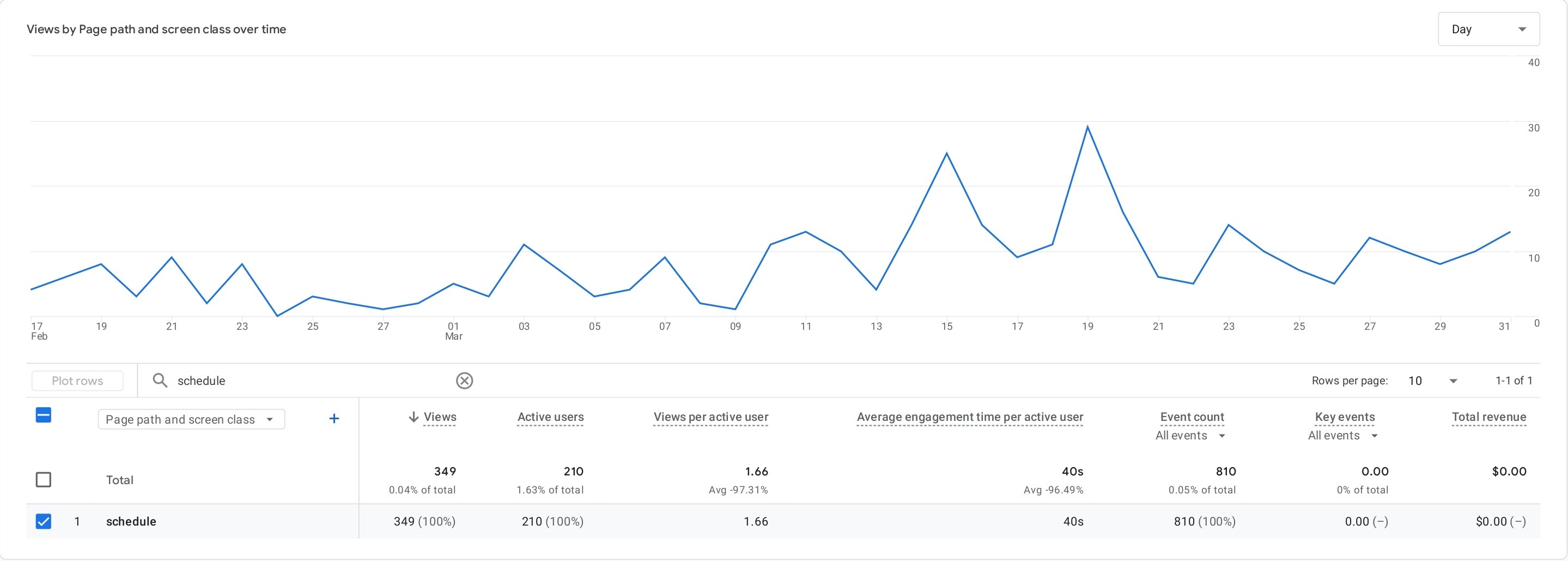
Low engagement is often a hierarchy problem, not a feature problem. Adding more options would have made this worse. Deciding what mattered most and designing around user intent created measurable impact with less on screen, not more.